Mining, Quarrying & Aggregates
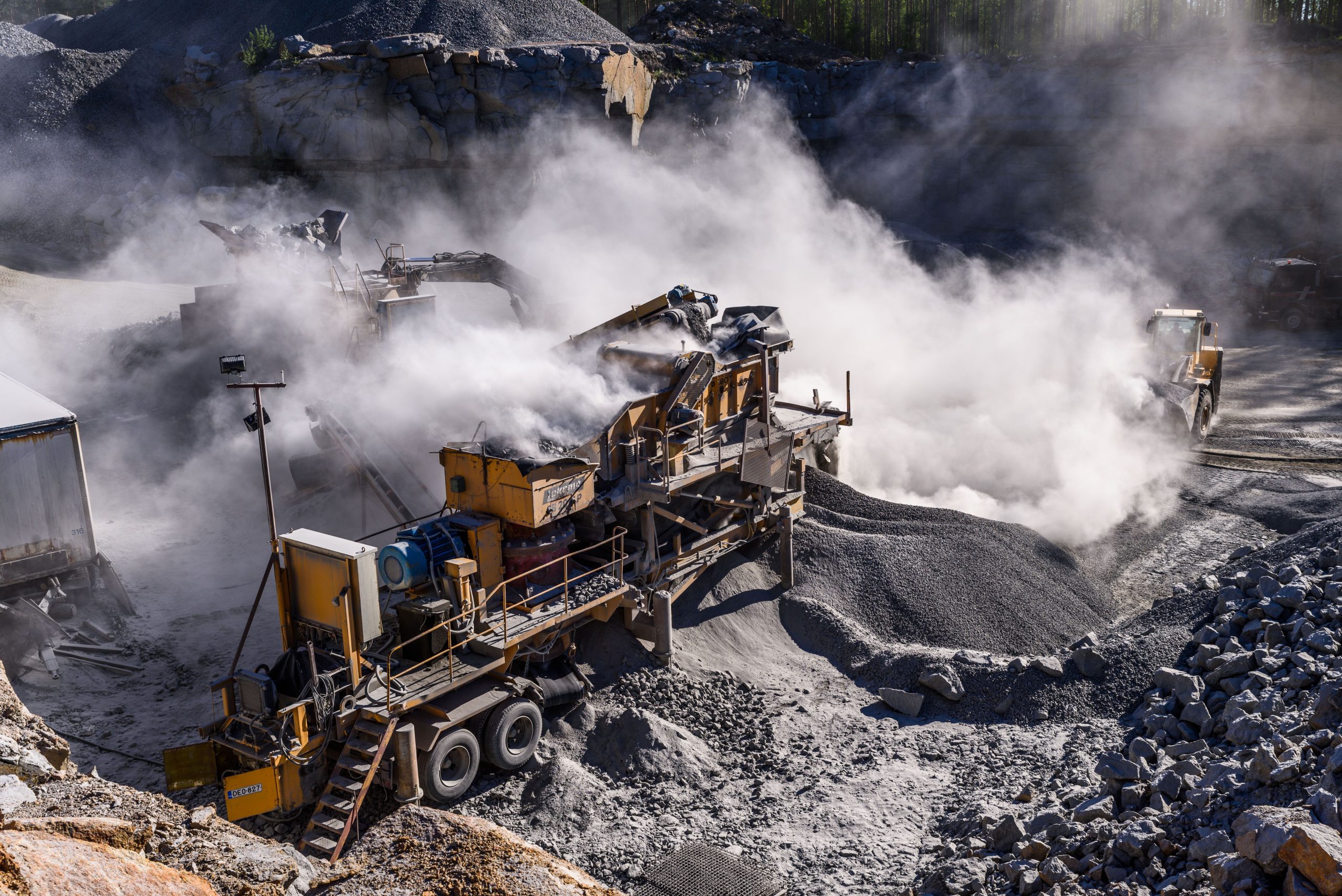
Mining operations present some of the industry’s most demanding air quality challenges, requiring reliable monitoring of respirable dust, diesel particulate matter, and crystalline silica. EDC’s real-time monitoring solutions provide continuous exposure data that helps industrial hygienists and safety professionals evaluate workplace conditions, verify engineering controls, and support compliance with MSHA, OSHA, and NIOSH monitoring requirements.
From underground to surface operations, our instruments deliver the accurate, field-ready performance needed to protect workers and maintain operational compliance.
Featured Products
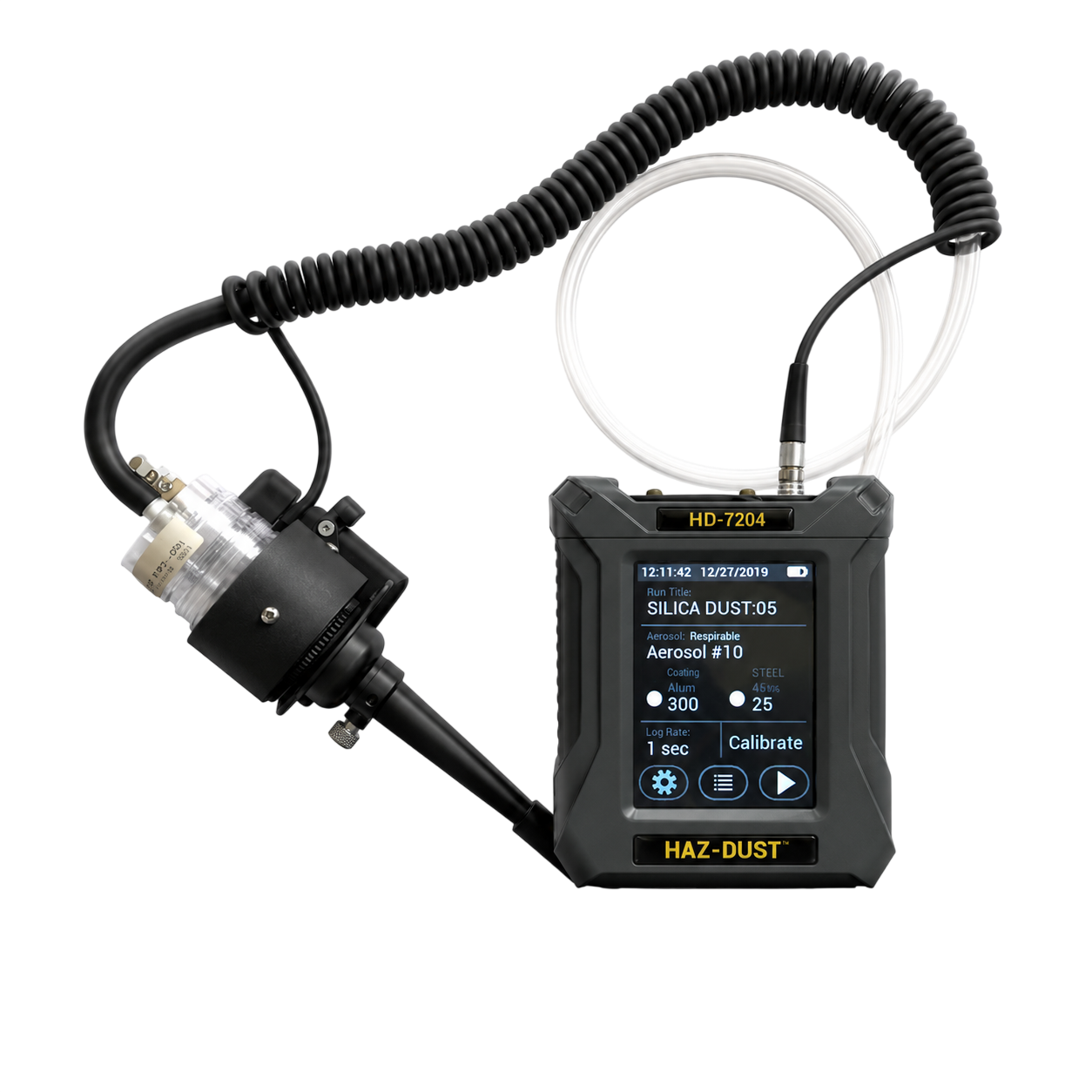
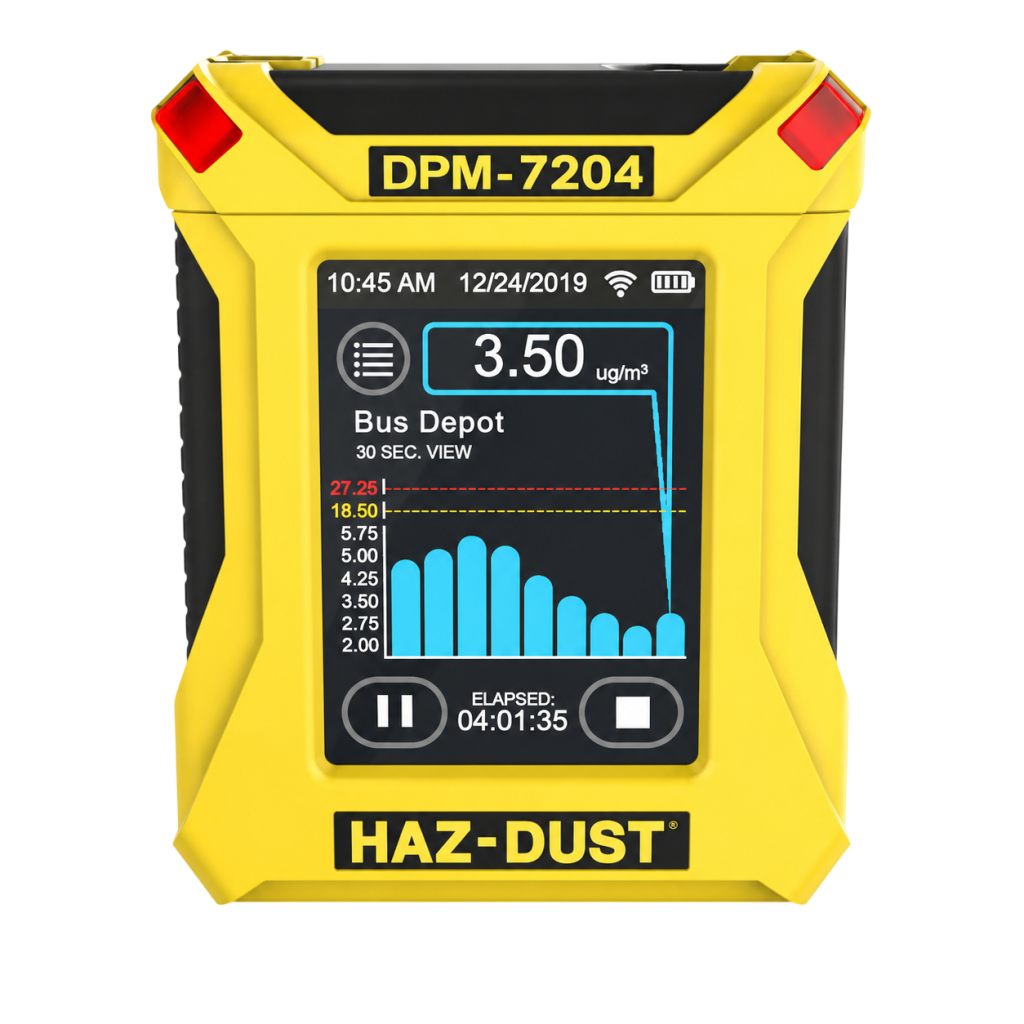 DPM-7204
Diesel Particulate Monitor
The Haz-Dust® DPM-7204 gives immediate visibility providing a continuous view into airborne particulate exposures, helping identify high-risk tasks, evaluate ventilation and dust controls, and allows safety professionals to see how dust exposure changes throughout a shift to make informed decisions to protect workers.
Suited for assessing diesel particulate exposure in mining and aggregate environments. Its GS-3 and GS-1 cyclone options support configurations for OSHA and MSHA sampling applications.
With real-time monitoring, breathing-zone sampling, filter-based collection, and support for respirable, inhalable, thoracic, and PM size fractions, the DPM-7204 provides a comprehensive tool for industrial hygiene and exposure assessment.
Engineered For Compliance
Designed around NIOSH 5040 Method compliance monitoring and outfitted to accept ISO validated Respirable, Inhalable, PM-10 and PM-2.5 inlets, as well as any 25mm or 37 mm filter pre-weighed and preloaded filter cassette for diesel particulate sampling. Features a flow-compensated pump to keep flow rate within specified range of the NIOSH 5040 Method.
Gravimetric & Real-Time Sampling
The “two instruments in one” system, combines a personal real-time aerosol monitor with compliance-oriented gravimetric sampling, allowing users to see particulate concentrations immediately while collecting a filter sample for gravimetric analysis. Industrial hygiene teams can reduce reliance on separate monitoring instruments and help investigate exposure events.
Designed For Accuracy
The DPM-7204 uses a 90° light-scattering, 880 nm optical sensor calibrated against a NIST-traceable gravimetric reference using SAE fine test dust. Designed to maintain ±10% accuracy to filter gravimetric measurements, with ±0.02 mg/m³ precision and a minimum resolution of 1 µg/m³, providing real-time particulate measurements alongside filter-based sampling.
Learn More
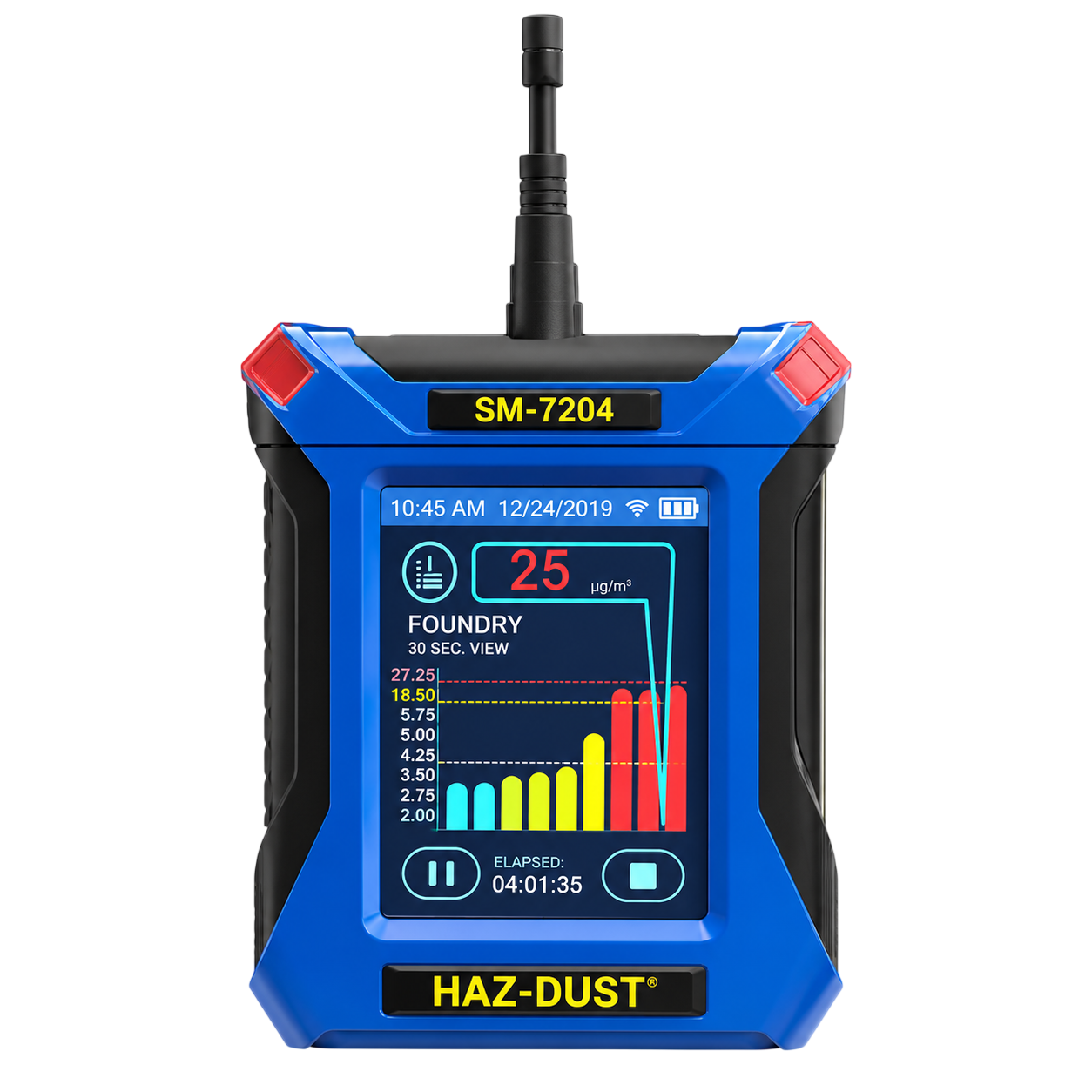
SM-7204
Silica Dust Monitor
The Haz-Dust® SM-7204 provides mining, quarrying, and aggregates operations with a practical solution for monitoring worker exposure to respirable crystalline silica and other airborne particulates.
Its miniaturized sensor is designed to be worn within the OSHA-defined breathing zone during gravimetric sampling, supporting accurate exposure assessment and real-time evaluation of particulate concentrations.
By combining real-time particulate monitoring with traditional gravimetric sampling, the SM-7204 enables industrial hygienists and safety professionals to identify high-exposure tasks, evaluate the effectiveness of dust-control measures, and better understand changes in worker exposure throughout the workday.
Engineered For Compliance
Designed to support the compliance of the NIOSH 0600 and NIOSH 7500 methods with a respirable sampling inlet that conforms to ISO 7708/CEN criteria and supports 4µm sampling configurations. The SM-7204 is suited for assessing respirable particulate exposure in mining and aggregate environments, and can accommodate all standard cyclone options to support configurations for OSHA silica sampling applications.
Gravimetric & Real-Time Sampling
The “two instruments in one” system, combines a personal real-time aerosol monitor with compliance-oriented gravimetric sampling, allowing users to observe potential respiratory hazards
immediately while collecting a filter sample for gravimetric analysis. Industrial hygiene teams can reduce reliance on separate monitoring instruments and help investigate exposure events.
Designed For Accuracy
The SM-7204 uses a 90° light-scattering, 880 nm optical sensor calibrated against a NIST-traceable gravimetric reference using SAE fine test dust. Designed to maintain ±10% accuracy to filter gravimetric measurements, with ±0.02 mg/m³ precision and a minimum resolution of 1 µg/m³, providing real-time particulate measurements alongside filter-based sampling.
Learn More
Related Articles
Biodiesel versus Diesel: A Pilot Study Comparing Exhaust Exposures for Employees at a Rural Municipal Facility
Working collaboratively with a local municipality, concentrations of particulate matter (PM) and other air toxics were measured at a recycling facility in southwestern New Hampshire while heavy equipment operated first on petroleum diesel and then on a B20 blend (20% soy-based biodiesel/80% petroleum diesel). This pilot study used a combination of established industrial hygiene and environmental air monitoring methods to estimate occupational exposure profiles to PM and air toxics from combustion of petroleum diesel and biodiesel.
Environmental Impact of Aggregate Mining by Crush Rock Industries in Akamkpa Local Government Area of Cross River State
Environmental disturbances as a result of mining and processing activities constitute a major threat to public health and environmental quality. The impact of aggregate mining operation such as noise, dust, air quality, suspended particulate matter and gaseous emission poses serious environmental problem to both the inhabitant and the workers at Crush Rock Industries Limited at Old Netim in Akamkpa Local Government Area of Cross River State. Eight geo-referenced sampling points were chosen for the study.